By the sacrament of Holy Orders, which is of divine institution, some of the faithful are marked with an indelible character and set in place as sacred ministers; they are consecrated and appointed, each according to his degree, to exercise in the person of Christ the office of teaching, of sanctifying and of governing — of shepherding the people of God.
The sacrament of Holy Orders has three degrees:
the diaconate
the presbyterate (the priesthood)
the episcopate ( the office of bishop )
It is conferred by the laying on of hands and by the prayer of consecration which the liturgical books lay down for each degree. It is conferred by a consecrated bishop, and in the case of the consecration of a candidate for the episcopate at least two further consecrating bishops take part alongside the principal consecrator.
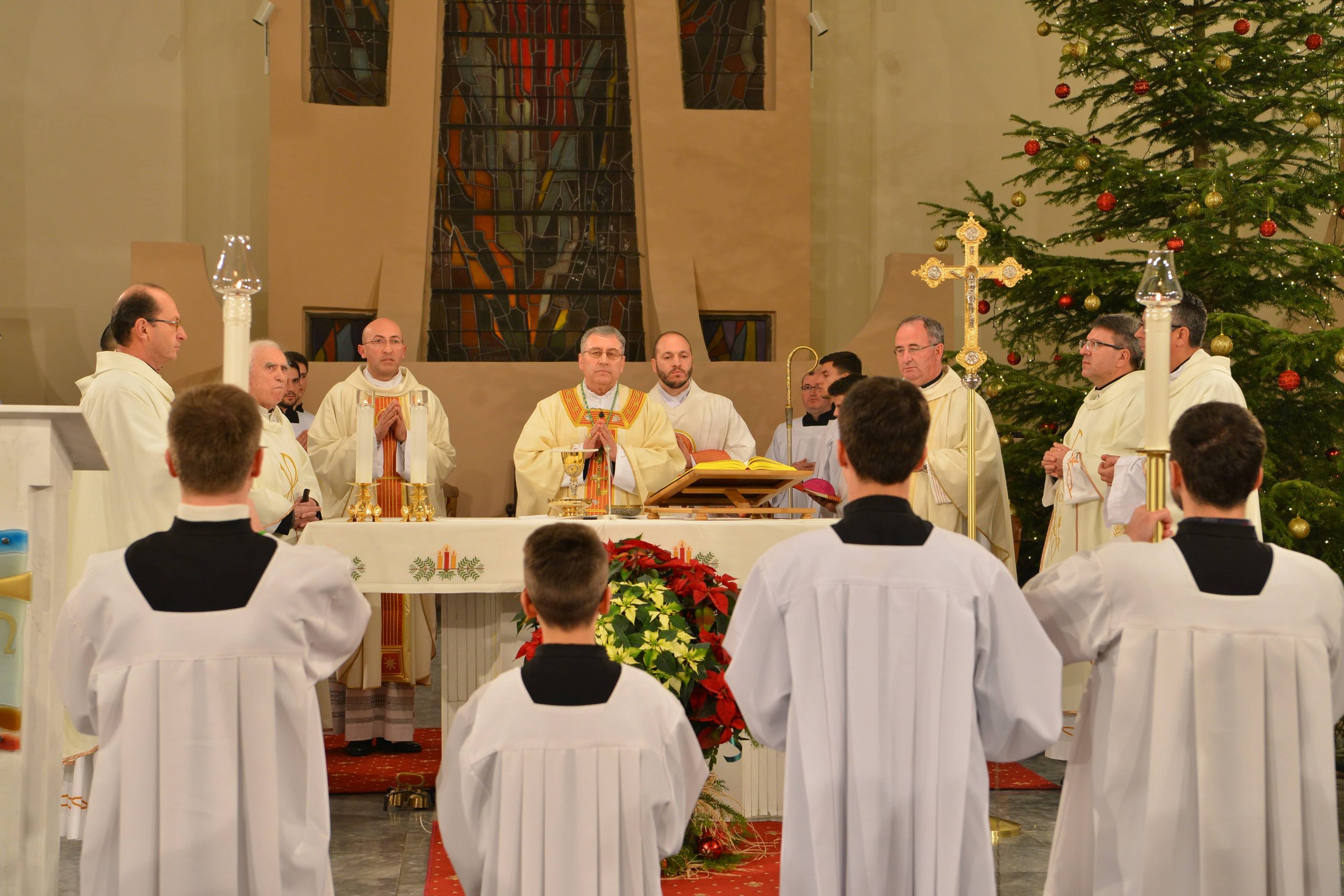
Who is a deacon?
The New Testament speaks of the office of deacon ( Greek diakoneín = to serve; Phil 1, 2; 1 Tim 3,8ff. ). A kind of forerunner of the diaconate may be seen in those seven men whom, according to the account in Acts 6, 1-6, the community in Jerusalem chose and whom the apostles, after prayer and the laying on of hands, appointed as their helpers. Although their first task was ‘to serve at table’, that is, a particular work of social care and charity, we very soon see these seven also in the service of proclamation, and of bringing people to conversion and to baptism ( Stephen, Philip ).
While the Eastern Churches to this day understand the diaconate as a permanent office held for life, in the West it has been known since the early Middle Ages as a stage on the way to the presbyterate. A man became a deacon not in order to remain in that order but so as to become a presbyter. The Council of Trent (1545-1563) attempted to introduce a permanent diaconate, but that decision was never carried out. It came about only at the Second Vatican Council. Thus the document Lumen gentium 29 sets out first of all the duties of the deacon: it belongs to the office of the deacon, as the competent authority shall assign to him, to administer baptism solemnly, to reserve and distribute the Eucharist, to assist at marriages and bless them in the name of the Church, to bring Communion to the dying, to read the Sacred Scripture to the faithful, to instruct and exhort the people, to preside at the worship and prayer of the faithful, to give blessings, and to preside at the rite of the funeral and the burial; dedicated as they are to duties of charity and of assistance…
The permanent diaconate may be sought by married and by unmarried men. Married men of mature years ( not under 35 ) may be ordained to the diaconate with the consent of the Bishop of Rome. The same procedure applies to unmarried men, except that they are bound by the obligation of celibacy for their whole life.
Candidates for the presbyterate take on from the diaconate the obligation to pray the Liturgy of the Hours; permanent deacons are counselled, as something most fitting for the heart, to pray daily that part of the Liturgy of the Hours which their episcopal conference determines.
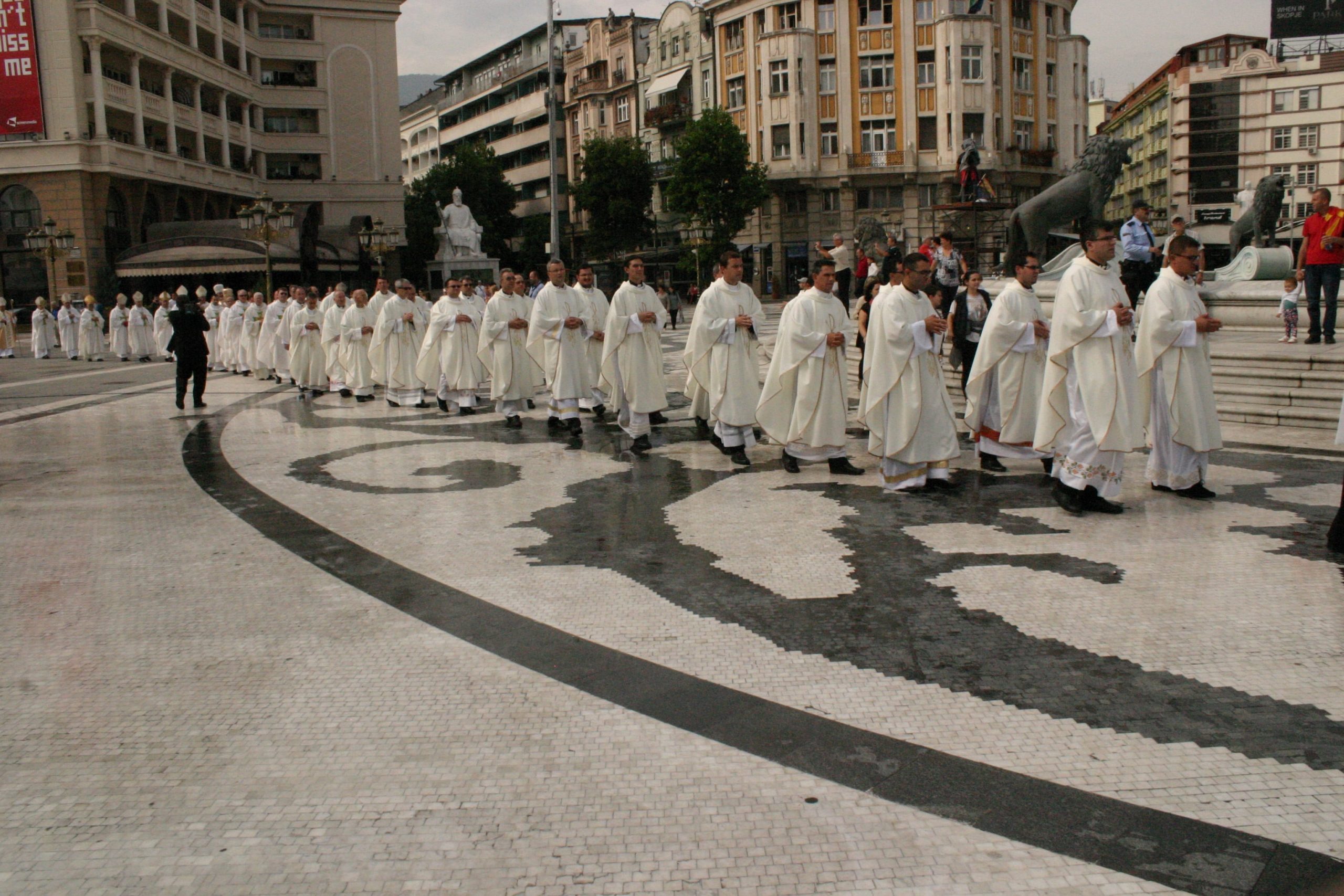
Who is a priest?
The priest is ‘alter Christus — another Christ’, since he acts in Christ’s name according to the words: “As the Father has sent me, so I send you” (John 20, 21). The priest is the servant of Christ: an instrument, that is, of the divine Redeemer, so that his wonderful work may be carried on down the ages.
The priestly vocation is a mystery. It is the mystery of an ‘admirable exchange’ — admirabile commercium — between God and man. The priest gives Christ his humanity, so that Christ may use him as an instrument of salvation, making of him almost a second self.
The aim of the presbyteral ministry is, in the words of St Augustine (De civitate Dei), that “the whole redeemed city, that is, the assembly and society of the saints, may be offered to God as a universal sacrifice by the great High Priest, who offered even himself in his Passion, so that we might be the body of so exalted a Head”.
The Letter to the Hebrews (5,1-4) speaks of the standing of the priest: “For every high priest chosen from among men is appointed to act on behalf of men in relation to God, to offer gifts and sacrifices for sins. He can deal gently with the ignorant and the wayward, since he himself is beset with weakness; and because of this he is bound to offer sacrifice for his own sins as well as for those of the people. And no one takes this honour upon himself, but only when called by God, as Aaron was.”
Unlike the deacon, the priest can administer the sacraments of reconciliation (confession), the anointing of the sick and confirmation (with the special permission of the bishop), and he can celebrate the Holy Mass, that is, consecrate the bread and the wine into the Body and Blood of Christ.
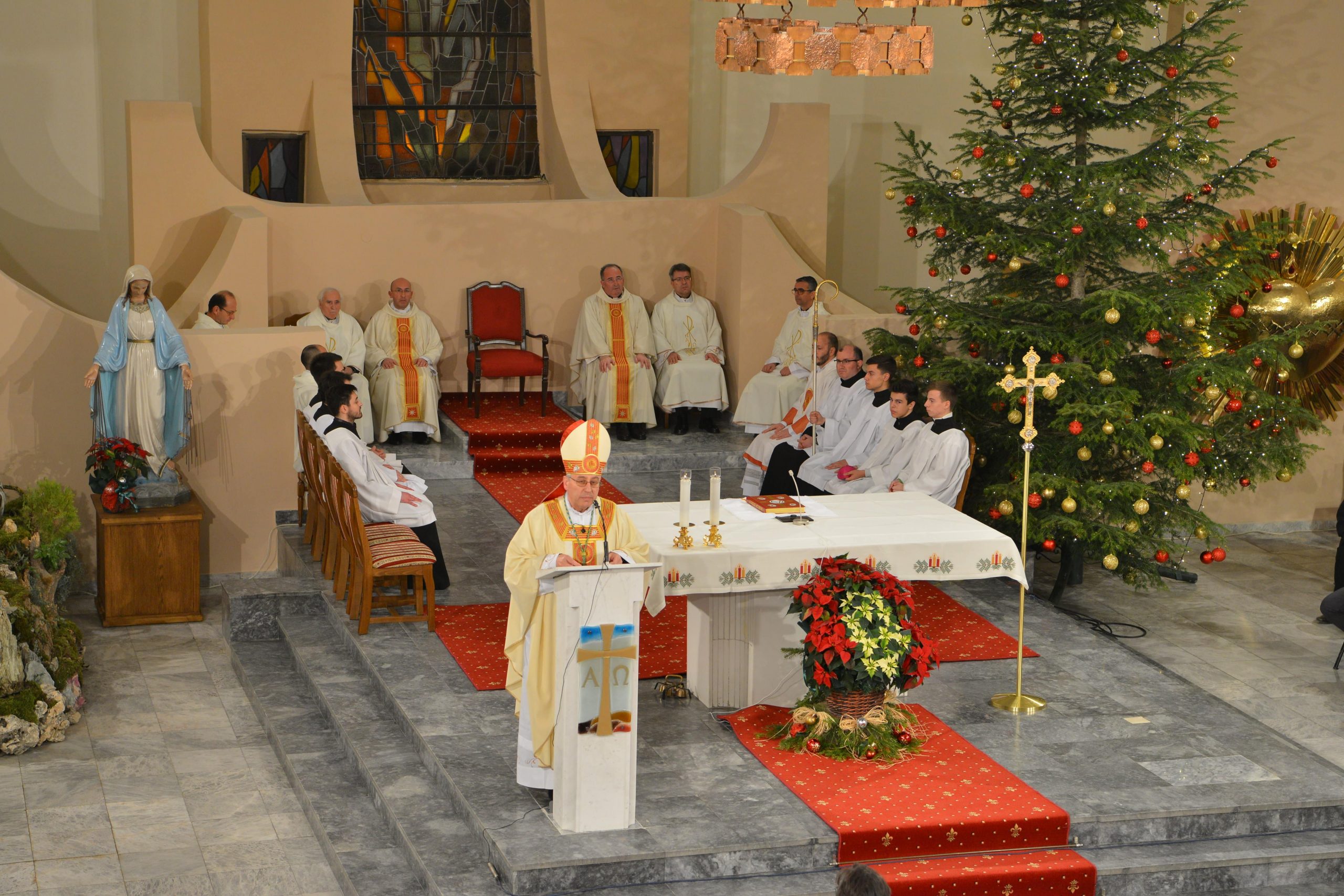
Who is a bishop?
The bishop is the one who continues the original apostolic ministry. The office of those who preside (Greek proistamenoi), found in the first communities founded by St Paul (1 Thess 5, 12), appears later in the established Jewish-Christian communities as the collegial office of elders (présbyteroi: Acts 11, 30; 15, 2), and in the Gentile-Christian communities as that of overseers (Greek epískopos: Phil 1, 1). Already in Acts 20, 17-30 this office is called a ‘pastoral office’.
The document Lumen gentium 21 states that by episcopal consecration the ‘fullness’ of the sacrament of Holy Orders is conferred, and that “bishops, in an eminent and visible way, take the place of Christ himself, teacher, shepherd and priest, and act in his person”.
It belongs to bishops to confer the sacrament of confirmation and to ordain candidates to the diaconate and the presbyterate.